
Did you know that trillions of dollars’ worth of data is sitting right on your desk, completely free, yet most marketers haven’t even touched it?
That’s not cash. It’s opportunity. It’s the foundation for personalization, optimization, and precise decision-making that can make your marketing strategies and campaigns more effective than ever.
1. Data: From luxury good to commodity
From 1950 to today, data storage costs have dropped over a million-fold. Back then, 256GB of data could cost up to $20 billion (inflation-adjusted). By the early 2000s, one gigabyte of storage still cost thousands of dollars. But over the past two decades, costs have fallen by 90% or more. Currently, one gigabyte of data costs just pennies, with cloud storage models ranging from $0.00099 to $0.0255/GB per month.
Source: https://ourworldindata.org/
This decline in data storage costs isn’t just technical. It’s the lever for a fundamental shift in how marketers approach their work, and a driving force for small and medium businesses to create breakthroughs when data is no longer the exclusive domain of big corporations.
Not only is storage cheaper, but data collection methods and sources for market and consumer data are also much more diverse and accessible than before:
- Web Analytics allows real-time tracking of user behavior on websites at no basic cost.
- Social Listening helps you “read” consumer sentiment and discussions at the moment they speak, at a fraction of the cost of traditional focus groups.
- CRM, POS, online surveys, e-commerce systems automatically capture data from numerous customer touchpoints efficiently and with minimal additional cost.
- Third-party measurement tools like SimilarWeb, Ahrefs, Fanpage Karma help you easily get an overview and evaluate competitors’ digital marketing activities.
Today, even a small startup can build tracking, analytics, and customer personalization systems similar to those of large corporations, if they know how to leverage the right tools.
2. The game has changed: Cheap data, expensive insights
Although data collection and storage costs have dropped dramatically, converting raw data into useful, actionable information still requires significant effort. The question now shifts from “How do we get data?” to “How do we transform data into meaningful information?”
This shift creates a significant “information gap” in data analysis between businesses that know how to analyze and transform data into information, and those that don’t yet have that capability. For marketing teams, this gap tends to fall within three levels:
3. How to genuinely improve data capability?
Don’t rush into complex technology or AI. First, objectively assess your current data capability, yours and your team’s, then improve step by step toward the highest level:
Phase 1: From “Low Maturity” to “Data-Informed”
Goal: Have a clear, accurate, and reliable picture of marketing activities, eliminate data silos, and build the essential foundation for upgrading to later phases.
Actions to take:
Inventory and centralize all data sources: Identify every marketing and customer data collection platform you currently have (Google Analytics, CRM, ad campaigns). Then centralize all sources into one place to avoid fragmentation. You can start with Google Sheets or Excel if you’re technically limited.
Identify metrics to measure: Start by asking: “What is our team’s most important goal for this campaign/business cycle?” Then work backward to identify Supporting Indicators, smaller numbers at different stages of the customer journey that help you understand why the main metric is rising or falling.
Standardize measurement definitions: Create a simple “data map” listing important metrics with clear definitions and designating the official data source for each.
Set up basic dashboards: Use tools like Looker or Power BI to visualize data with scheduled refreshes to track progress.
Train your team to read and respond to data: Understand the metrics on your dashboard and their meaning. Practice analytical thinking. Don’t just “look at numbers” but ask “why” and “how.”
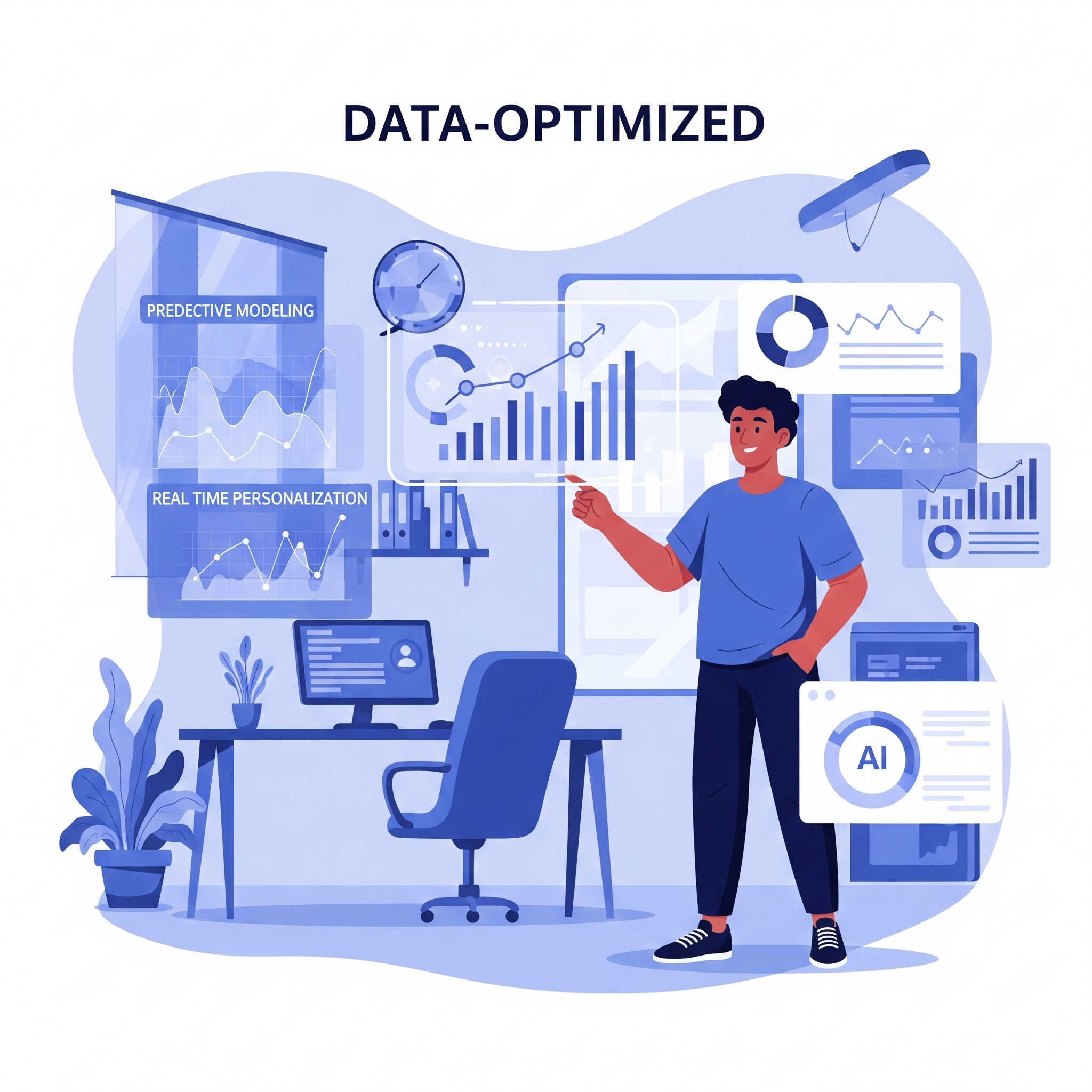
Phase 2: From “Data-Informed” to “Data-Optimized”
Goal: Not just understand data, but act flexibly and continuously optimize based on valuable, detailed insights.
Actions to take:
Build a professional storage system: Transition to a proper data warehouse for deeper, multi-dimensional analysis models that unlock more valuable insights.
Advance analytical models: Go deeper with funnel analysis, A/B testing, and attribution models. These tools help you not only know “what happened” but start predicting “what will happen” and “what to do.”
Proactively integrate data into marketing decision processes: Shift from “observer” to “decision-maker.” Data doesn’t just tell you what happened, but helps you understand why and what to do next.
Phase 3: Data-Optimized to Data-Driven Growth
Goal: Data becomes a living part of every strategy and operation, continuously optimizing performance and proving ROI.
Actions to take:
Apply simple predictive analysis: Use predictive analysis to forecast future customer behavior. This helps you be more proactive in marketing campaigns.
Real-time customer experience personalization: Use behavioral analysis to adjust ad content (Dynamic Ads), product recommendations, and hyper-personalized emails in real time. Companies excelling in personalization generate 40% higher revenue.
Develop a comprehensive Marketing Intelligence ecosystem: Build a complete MI ecosystem that serves as a “strategic compass,” providing a panoramic view for higher-level strategic decisions beyond just campaign optimization.
Conclusion: Data won’t do marketing for you, but it helps you do it better, faster, and more accurately.
If you found this article useful, share it with colleagues and friends so we can all do marketing more effectively in the era of cheap data but valuable data capabilities.