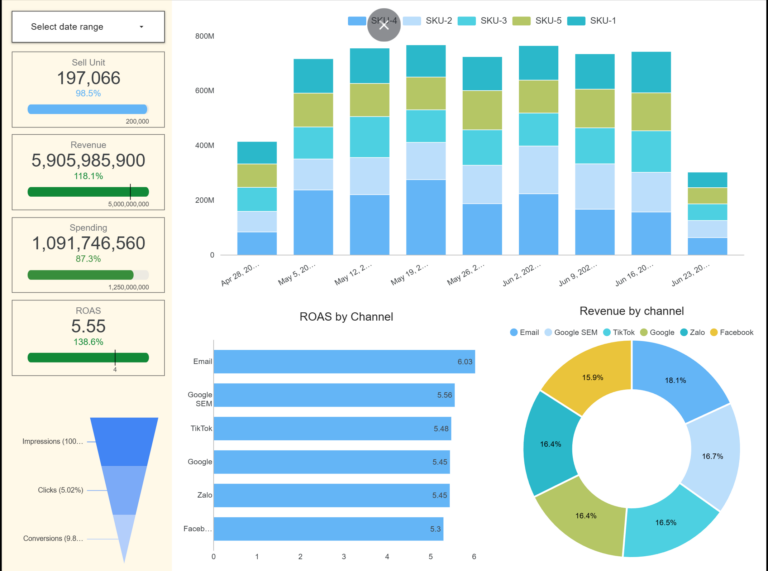
Have you ever encountered this situation? Detailed reports from ad campaigns and your sales system show: revenue and customers from TikTok Ads increased 130%, ROAS jumped from 5.2 to 7.0 but… your shop/company’s total revenue barely budged compared to last period. So what on earth happened?
1. The “ghosts” in your reports
You might be falling into one of these common but often overlooked situations:
- Cannibalization, channels eating each other: You see Facebook Ads performing well, so you increase the budget. Facebook Ads then reach customers who would have come from Google, Zalo, TikTok, etc. Revenue attributed to Facebook goes up, but it’s really just a shift from other channels. The total number of new customers hasn’t changed.
- The “credit-stealing” effect, organic customers attributed to ads: A loyal customer who learned about you through word-of-mouth is about to buy, then sees your ad and clicks on it. BOOM! The system credits that conversion to the ad channel.
2. The golden question: “Would revenue increase without ads? If yes, by how much?”
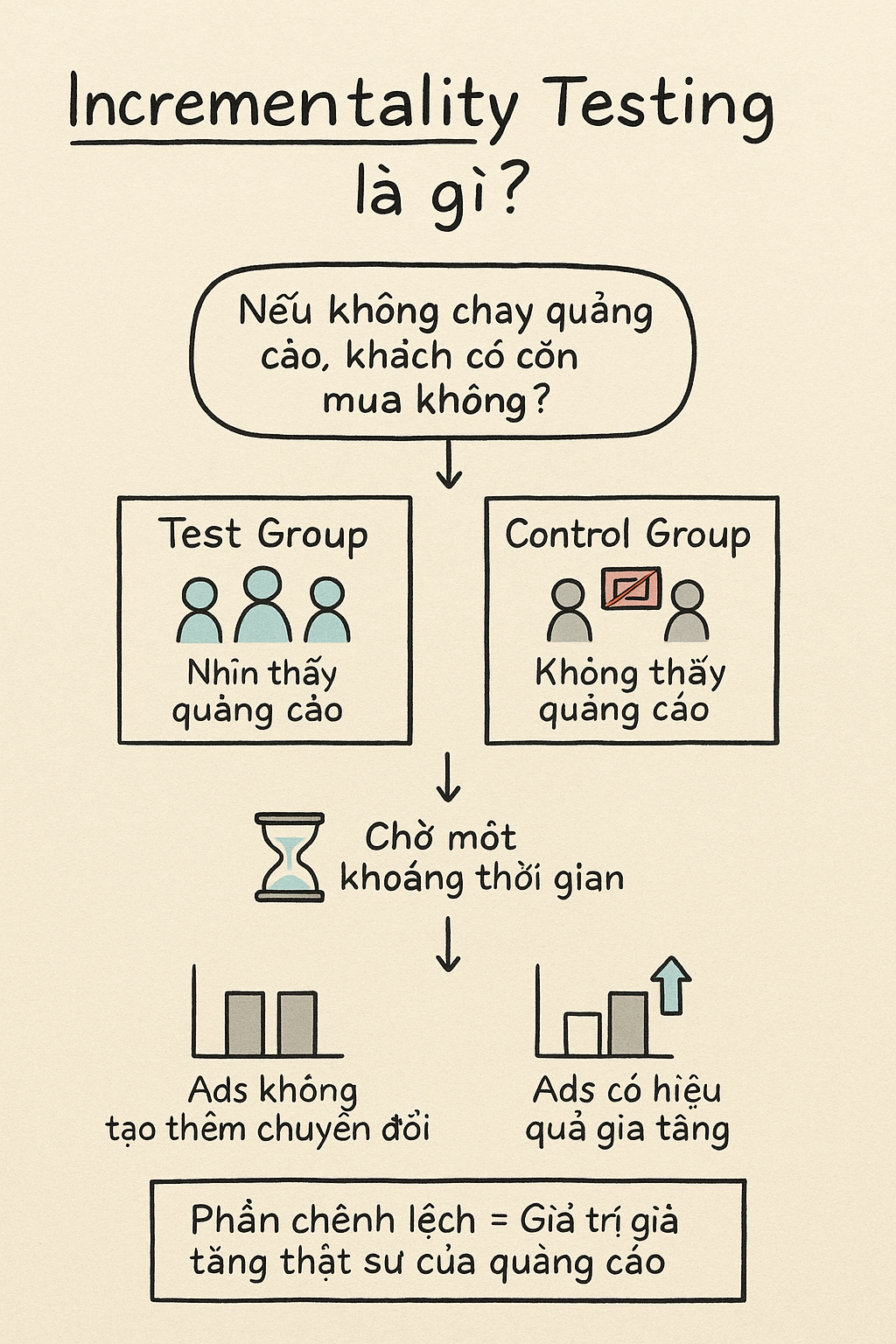
Incrementality Testing is a method that measures the incremental impact that an ad campaign actually creates.
Instead of asking “Did the ad generate conversions?”, you ask:
“Did the ad increase conversions?”
How to implement it simply
Step 1: Split your audience into 2 similar groups
- Group A: targeted with ads (Test group)
- Group B: no ad exposure (Control group)
Step 2: Run the campaign for Group A, keep everything the same for Group B
Step 3: Measure results after a period of time
After some time (minimum 2 to 4 weeks), measure these core metrics:
- Incremental Lift:
Lift = (Test Group Conversions) – (Control Group Conversions) This is the number of conversions truly generated by the ads.
- Incremental ROAS:
Incremental ROAS = (Revenue from incremental conversions) / (Total ad spend)
Real-world example
You run retargeting for website visitors and the results look great: 4% CTR, 5% conversion rate.
But when you run an incrementality test, you discover:
- Control group (no ads) still converts at 4.7%
- Test group (saw ads) converts at 5%
The actual uplift is only 0.3%, meaning you’re spending money on customers who would have converted anyway.
With high CPC but low incremental impact, you could:
- Cut retargeting budget
- Increase investment in email or CRM
- Optimize creative so ads actually drive behavior change
Subscribe to the “From Insights To Impacts” newsletter every Thursday!